
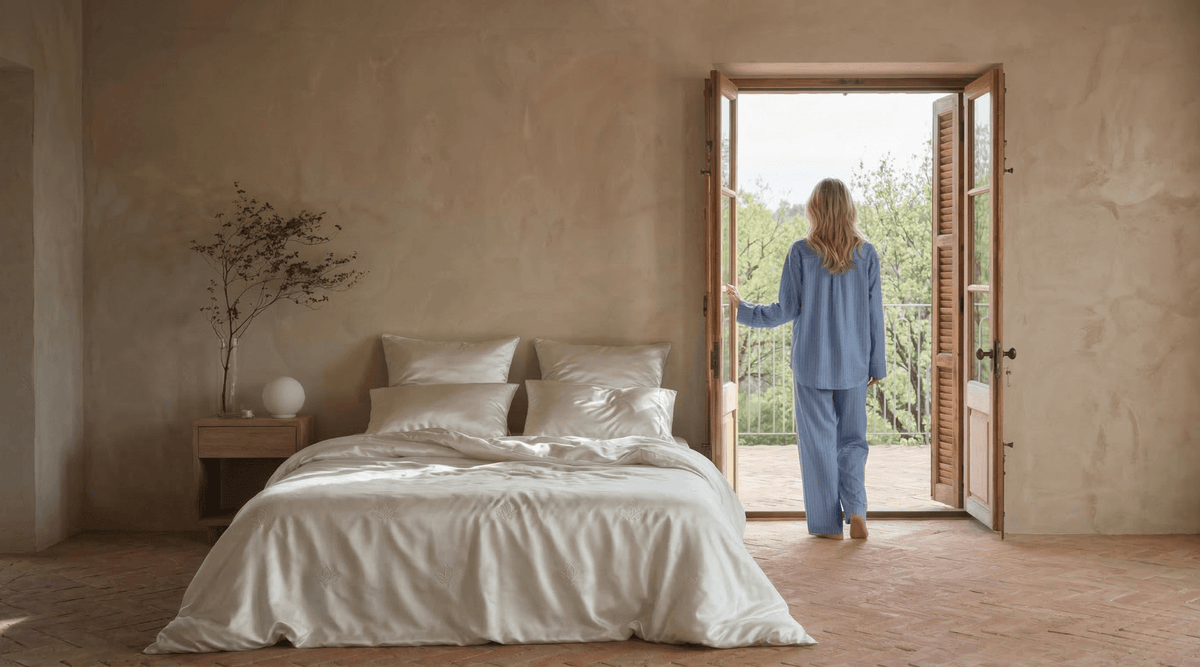
Quick Answer: What Cooling Sheets Really Do
Cooling sheets don’t lower your body temperature. Instead, they help your body release heat and moisture more efficiently, which can reduce that trapped, sweaty feeling at night. This is why the right cooling sheets can work year-round. Keeping you comfortable in summer and warm without overheating in winter.
How Cooling Sheets Actually Work
The way cooling sheets feel at night is influenced by basic heat transfer, airflow, and moisture evaporation. Research and consumer testing consistently show that fabric choice and construction matter far more than marketing terms like “cooling technology.” For example, Better Homes & Gardens testing notes that crisp, percale-style sheets are popular with hot sleepers because they’re breathable and feel cooler through the night.
Breathability Beats "Cool-to-the-Touch"
Some sheets feel cool the moment you touch them. This usually happens because the fabric surface quickly pulls heat away from your skin. While that initial sensation can feel refreshing, it’s short‑lived. Within minutes, your body warms the fabric, and if the material doesn’t release heat well, that early cool feeling disappears.
What matters more during an entire night of sleep is breathability. How easily air and heat can move through the fabric. Breathable sheets allow excess body heat to escape gradually over several hours, instead of trapping it between your skin and the mattress.
In simple terms, cool to the touch affects the first few minutes in bed, while breathability affects how comfortable you feel all night long.
Moisture Control and Night Sweating
Night sweating isn’t just about room temperature. It’s part of how your body regulates heat during sleep. And when moisture stays trapped against the skin, it can increase discomfort and disrupt sleep.
Your body releases moisture during sleep, even if you don’t notice it. This moisture comes from sweat and natural heat regulation. When sheets hold onto that moisture, it stays close to your skin, which makes you feel warmer and more uncomfortable over time.
Moisture‑wicking fabrics work differently. At a fiber level, they pull moisture away from your skin and spread it across a wider surface area of the fabric. This allows the moisture to evaporate more easily instead of building up in one spot.
In simple terms, when moisture can escape, heat can escape with it. That’s why sheets that manage moisture well tend to feel cooler and less clammy over long periods of sleep.
What to Look For in the Best Cooling Sheets

When comparing options, focus on how the sheets behave overnight. Not just how they’re marketed.
-
Exact material specs: Look for clear fiber information, not vague “cooling” labels. Knowing the exact material helps you understand how the sheets will handle heat and moisture.
-
Proven Moisture-wicking: Fabrics that move moisture away from your skin tend to feel drier and more comfortable over long nights, especially if you sweat.
-
Durability: Hot sleepers often wash their sheets more frequently due to sweat and humidity. Because of this, durability matters. Choose sheets made from materials that can handle repeated washing without thinning out, pilling, or losing their feel too quickly. Sheets that break down fast may stop performing well long before they look worn.
-
Breathable weaves: This refers to how the threads are arranged, not the fiber itself. Some weaves leave more tiny gaps between threads, which lets air move through the fabric more easily. That airflow helps excess heat escape during the night. Breathable weaves matter, but they work best when the material already handles moisture well. A good weave can support cooling, but it can’t fully fix a fabric that traps sweat.
Top Materials for Hot Sleepers (Ranked by Performance)
|
Material |
Breathability |
Moisture-Wicking |
Feel |
Best For |
Durability |
|
Eucalyptus Lyocell |
Excellent |
Excellent |
Smooth, silky |
Year-round hot sleepers |
High |
|
Cotton Percale |
Excellent |
Good |
Crisp, lightweight |
Warm climates |
High |
|
Linen |
Excellent |
Good |
Textured (softens over time) |
Natural texture lovers |
Very High |
|
Bamboo Lyocell |
Very Good |
Very Good |
Soft |
Softness + cooling |
Good |
|
Cotton Sateen |
Fair |
Fair |
Silky, warm |
Cooler sleepers |
High |
SĀNTI Recommendation: Eucalyptus lyocell sheets lead in moisture transport and airflow tests; ideal breathable cooling sheets.

Eucalyptus (Lyocell)
Eucalyptus lyocell is a natural fiber, but it’s processed in a way that changes how it behaves compared to cotton. Lyocell is a regenerated cellulose fiber, meaning plant material is dissolved and re‑formed into smooth filaments. The fibers are smoother and more even, which helps moisture move along the fabric instead of soaking deep into it.
In practical terms, cotton tends to absorb moisture and hold it. Once it gets damp, it can stay that way longer, which often leads to a heavier, warmer feeling as the night goes on.
Eucalyptus lyocell works differently. It pulls moisture away from your skin and spreads it across the fabric, where it can dry more easily. When moisture doesn’t stay trapped, heat is less likely to build up. This is why eucalyptus sheets often feel drier and more consistent over long nights of sleep.
Because this process happens continuously, eucalyptus fabrics tend to work well year‑round. Feeling fresher in summer and warm without feeling sweaty in winter.
Cotton: Percale vs Sateen
Cotton can feel very different depending on how it’s woven. The fiber is the same, but the weave changes how heat and air move through the sheets.
Cotton percale uses a simple, one-over-one weave. Percale refers to a crisp, tightly structured weave that allows more airflow through the fabric. This creates more space between threads, which allows air to flow more easily. Because of that airflow, percale tends to feel crisp, light, and cooler over long periods of sleep. Many hot sleepers prefer percale because it doesn’t trap heat as the night goes on.
Cotton sateen uses a tighter weave that brings more threads to the surface. This is why sateen feels smoother and silkier at first touch. The trade-off is reduced airflow. With less air moving through the fabric, heat and moisture can build up more easily, especially for people who already sleep warm.
Neither option is bad. Percale usually works better if you overheat or live in a warmer climate. Sateen can feel more comfortable if you sleep cold or want a softer, warmer feel.
Linen and Fabric Blends
Linen is made from flax fibers and is known for being very breathable. It allows heat to escape easily, which is why many hot sleepers like it. However, linen has a distinct texture. The fibers are thicker and less uniform than cotton or eucalyptus, so the fabric can feel slightly rough or crisp, especially when new. Some people enjoy this natural, airy feel, while others prefer sheets that feel smoother against the skin.
Over time, linen usually softens with washing, but it rarely becomes silky. This is why linen’s texture isn’t for everyone.
Fabric blends vary widely. Some combine natural fibers for durability, while others include synthetics. Blends with a high synthetic content may reduce breathability and moisture release, which can lead to more heat buildup during sleep.
Bamboo (Viscose or Lyocell)
Bamboo sheets are often mentioned for hot sleepers, but the details matter. Most bamboo bedding is not made from raw bamboo fibers. Instead, it’s typically bamboo viscose or lyocell, which are regenerated cellulose fabrics. Similar in category to eucalyptus lyocell.
When processed well, bamboo-based fabrics can feel soft, smooth, and breathable. They tend to handle moisture better than many synthetic materials and can feel cooler than heavier cotton weaves. However, performance varies widely depending on how the fabric is made.
Bamboo viscose is a type of rayon made by dissolving plant cellulose and reforming it into fibers. It often feels very soft and cool at first, but it can be less durable over time, especially with frequent washing.
Bamboo lyocell is also a regenerated cellulose fiber, but it’s produced using a different process that tends to create more stable, uniform fibers. This structure can help fabrics manage moisture more consistently and hold up better over time.
This is why two bamboo sheet sets can feel very different, even if they’re labeled the same.
For hot sleepers, bamboo-based sheets can be a good option if breathability and softness are priorities. But it’s worth checking how the fabric is processed and how well it holds up to regular washing.
Not sure yet?
If you’re mostly here to understand what kind of fabric might work for you, browsing a few real examples can help. You can quietly explore SĀNTI’s eucalyptus bedding alongside this section and see how it compares to the materials discussed above.
Avoid These Cooling Sheets Pitfalls

Many people end up disappointed with cooling sheets not because the idea is wrong, but because of a few common buying mistakes.
-
Heavy finishes that trap heat: Some sheets are treated to feel extra smooth or thick. While this can feel nice at first, heavy finishes reduce airflow and make it harder for heat and moisture to escape. Over time, this often leads to a warmer, stuffier feeling.
-
Synthetic blends that don’t breathe well: Many synthetic fibers don’t release heat or moisture easily. When blended into sheets, they can trap sweat close to your skin, which is the opposite of what most hot sleepers need.
-
Overreliance on thread count: A higher thread count doesn’t automatically mean better cooling. In many cases, tightly packed threads reduce airflow. Material and weave matter far more than a single number.
-
Expecting sheets to replace room temperature control: Cooling sheets can improve comfort, but they can’t overcome a very hot room, poor ventilation, or heavy bedding. They work best as part of a complete sleep setup, not as a standalone fix.
Understanding these limits helps set realistic expectations and makes it easier to choose sheets that actually support better sleep. Some materials and tighter constructions can trap heat and moisture, which is why cooling performance usually comes down to fabric choice and breathability. Not just marketing claims.
Fabrics That Don’t Work Well for Hot Sleepers
Some sheet materials are commonly marketed as soft or luxurious, but they tend to work poorly for people who overheat at night.
-
Polyester and microfiber: These synthetic fabrics are tightly woven and don’t breathe well. They tend to trap heat and moisture close to the skin, which can quickly lead to a warm, sweaty feeling. Even when labeled as “cooling,” the effect is often short‑lived.
-
Flannel: Flannel is brushed to feel warm and cozy. That brushed surface holds heat by design, making it a poor choice for hot sleepers or for year‑round use.
-
Silk: Cool at first touch, but it doesn’t handle moisture well. Once it becomes damp, it can feel heavy and uncomfortable, especially for people who sweat at night.
-
High‑synthetic blends: Sheets with a large percentage of synthetic fibers often sacrifice breathability for durability or wrinkle resistance. This trade‑off can increase heat buildup during sleep.
These fabrics aren’t bad in general. They’re just better suited for people who sleep cold or prefer a warmer, more insulated feel.
Why Choose Year-Round Cooling Sheets (Not Seasonal)
Many people buy cooling sheets as a summer-only fix. Then switch to heavier, heat-trapping sheets in winter. The problem is that overheating doesn’t stop just because the season changes. Indoor heating, thicker duvets, and reduced airflow can still cause excess heat and moisture buildup during colder months. Overheating can still happen in winter due to indoor heating, thicker duvets, and reduced airflow.
Choosing the right cooling sheets is really about investing once, but choosing smart. A well-designed, breathable fabric can help you stay warm in winter without sweating, and feel fresher in summer without relying on artificial cooling. Instead of owning different sheets for different seasons, many sleepers benefit more from one balanced, year-round option that adapts as conditions change.
Quick takeaway
There’s no single fabric that works best for everyone, but certain materials tend to handle heat and moisture better than others. Many hot sleepers do well with breathable, natural options like eucalyptus lyocell, cotton percale, or linen, especially when they’re looking for comfort that doesn’t change much from season to season.
Eucalyptus is one option that often works well as a middle ground. It combines good airflow, effective moisture control, and a smooth feel, which can make it comfortable both in warmer months and during cooler nights without feeling sweaty.
If that balance sounds like what you’re looking for, you can explore SĀNTI’s eucalyptus bedding to see how it might fit into a year‑round sleep setup.

Are Cooling Sheets Right for You?
Yes if
-
Wake up sweaty during the night
-
Sleep in warmer or humid environments
-
Prefer lighter, breathable bedding
Maybe not if: If you rarely overheat or prefer very heavy bedding, a cooling-focused fabric may not feel as satisfying. There’s no single best option for everyone.
Frequently Asked Questions
Do cooling sheets really work?
Cooling sheets don’t actively cool your body, but they can improve comfort. They work by helping heat and moisture move away from your skin more efficiently, which reduces that trapped, sweaty feeling many people experience at night.
Best cooling sheets material?
Sheets made from breathable, moisture‑handling materials tend to feel the most comfortable for hot sleepers. Fabrics like eucalyptus lyocell, cotton percale, linen, and well‑made bamboo are often preferred because they allow airflow and help moisture evaporate instead of building up. Material and weave tend to matter more than thread count when it comes to cooling performance.
Are bamboo sheets cooling?
Bamboo sheets can feel cooling, but it depends on how they’re made. Most bamboo bedding is bamboo viscose or lyocell, which can be soft and breathable when processed well. Bamboo lyocell generally offers better durability and moisture control than bamboo viscose, which may wear out faster with frequent washing.
Cooling sheets for winter?
Yes. Cooling sheets are designed to regulate temperature, not remove warmth. When layered with the right duvet or blanket, breathable sheets can keep you warm while reducing sweat buildup that often causes discomfort in colder months.
Cooling sheets' lifespan?
The lifespan of cooling sheets depends on the material and the frequency of washing. Durable, well‑made fabrics that maintain their structure can stay comfortable for several years with proper care. If you wash often (which many hot sleepers do), following care basics matters. For example, experts note that very hot wash water can break down fibers over time, so warm water is often a safer default for sheet longevity.
Next Step
If temperature balance is something you struggle with, exploring breathable, natural-material bedding may be a helpful next step. You can learn more about SĀNTI eucalyptus bedding and year-round comfort on our site.
Share:
Mind, Body, Sleep, and the Powerful Connection Between Them
When to Replace Your Bed Sheets (Plus Signs It’s Time)